Valuable Insight
The data existed. The operating view did not.
A large VBC organization had strong internal teams and plenty of data. But leaders still struggled to get the right information at the moment they needed to act.
New initiatives created new questions.
Data lived across different systems. Existing reports had been built for earlier needs. Meanwhile, internal technical teams were supporting a large enterprise with many competing priorities.
“We have data, but it lives in a million different places and it’s not really evolving. Once the dashboard was stood up, it wasn’t really changed, and when we had something new come up, it took so long for something to be built.”Operations leader, value-based care
“I want to do this new initiative, but I have no insight on the data. Or we might have this problem, but I have no insight on the data.”Operations leader, value-based care
We started with the decision, not the dashboard.
Valuable Insight worked across business, operations, clinical, and technical teams to understand what people were trying to do — then built the smallest useful view around that workflow.
“We would say what we want, and they would tell us, ‘I think this is what you actually want.’ And they were usually right.”Senior transformation lead
Open slots were visible. The bigger opportunity was knowing who should fill them.
A daily scheduling view
Leaders needed more than a count of open slots. They wanted to know where capacity was available, which patients should be prioritized, and where the team could act before the day was lost. We built a focused view that connected schedule capacity with patient opportunity and kept the feedback loop active while the workflow improved.
This is the specific workflow result we highlight because it was directly tied to the visibility and feedback loop we helped create.
“We saw a 20% increase in our slot usage, because no one knew it was bad. People want to do well at work, and it gave them the way to see how they’re doing.”Operations leader, value-based care
“Tomorrow’s not really full. I could fill this provider up.”Operations leader, value-based care
“We rank the sites every day, and the team sends it out for us. People message me saying, ‘I don’t want to be bottom five.’ It’s extremely motivating for the staff.”Operations leader, value-based care
Not another dashboard. A faster operating rhythm.
The organization could move more quickly from a business question to a usable view, and from a high-level metric to the people and actions behind it.
“They take a lot of messy data and create things that help you build a real strategy. They tell you exactly what is going on in your business and show you where you want to be.”Senior transformation lead
“They will stand that up in one or two days for us. If I need something, it’s the quickest turnaround. I trust them, I know it’s accurate.”Operations leader, value-based care
Strong VBC organizations still have blind spots.
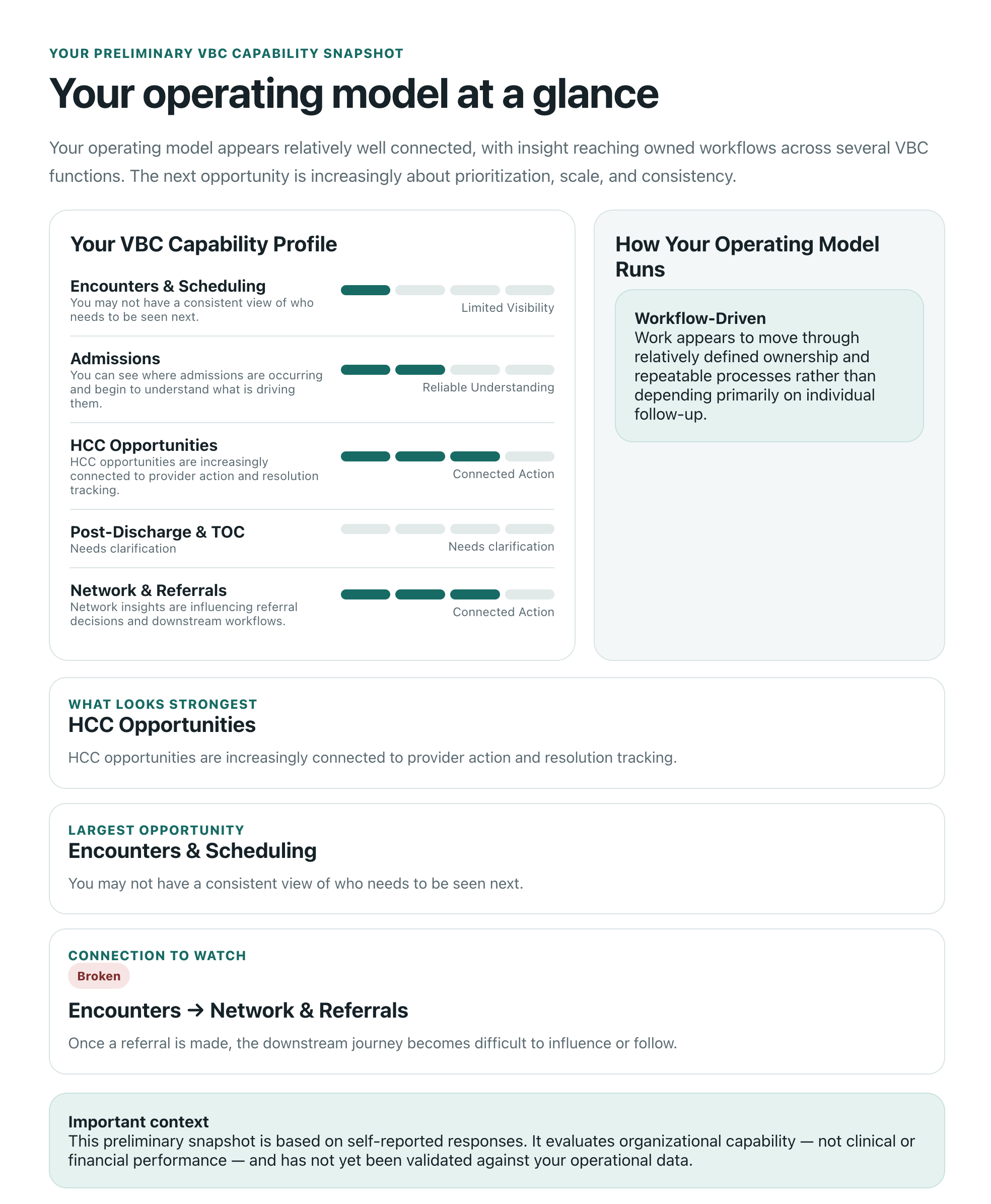
The VBC Blind Spot Scan helps leaders quickly see where insight is reaching action — and where it may be getting lost.
Start the VBC Blind Spot Scan →